Some photographers chase light. Brian Skerry chases the space where light disappears entirely — forty, sixty, a hundred feet down, where the sun becomes a rumor and the ocean keeps its secrets. For more than three decades, he’s been the one talking it into giving a few of them up.

If you landed here looking for the story behind those images — the shark portraits, the whale close-ups, the frozen dives under Antarctic ice — you’re in the right place. Here’s what makes Brian Skerry’s underwater photography some of the most recognizable work in ocean conservation today.
Who Is Brian Skerry?
Skerry is a photojournalist who has spent his career working almost exclusively underwater, much of it on assignment for National Geographic. He’s not a wildlife photographer who occasionally gets wet. He’s built an entire practice around the logistics, patience, and risk of shooting where most cameras never go.
His subjects range from harbor seals off New England to sperm whales in the Caribbean to leopard seals in Antarctica. What ties the work together isn’t just marine life — it’s the relationship between that life and the humans changing it.
A Career Built on Immersion
Skerry logs an extraordinary number of hours underwater every year, often in conditions that would end most shoots before they start: near-freezing water, low visibility, strong currents, animals that outweigh the boat. That immersion is the whole method. He doesn’t shoot the ocean from a distance — he lives inside it long enough for it to stop performing and start behaving normally.
What Makes His Underwater Photography Distinct
Plenty of photographers can capture a sharp image of a fish. Skerry’s photographs tend to do something else — they place the viewer inside a relationship, a behavior, a moment of vulnerability or power.
- Patience over proximity. Many of his most striking shots come from waiting — sometimes for days — for an animal to approach on its own terms rather than being chased into frame.
- Storytelling structure. His underwater work is rarely a single hero shot. It’s built as a photo essay, with wide environmental frames, tight behavioral details, and human context woven through.
- Technical control in hostile conditions. Getting a properly lit, sharply focused image of a fast-moving animal in murky or frigid water requires equipment and technique most photographers never have to develop.
- A conservation throughline. The images consistently point toward a larger issue — overfishing, plastic pollution, habitat loss — without needing a caption to make the point obvious.
The Human Element
A recurring thread in Skerry’s underwater photography is people: fishermen, scientists, indigenous communities whose lives are tied to the sea. Rather than treating the ocean as an untouched wilderness, his work often shows the friction point where human activity and marine ecosystems meet — which is usually where the most urgent stories live.
Signature Subjects and Stories
Whales
Few photographers have spent as much time face-to-face with large whales in open water. Skerry’s images of sperm whales and right whales are notable for how close and how calm they feel — not adrenaline shots, but quiet, almost intimate encounters with animals that could end the encounter instantly if they chose to.
Sharks
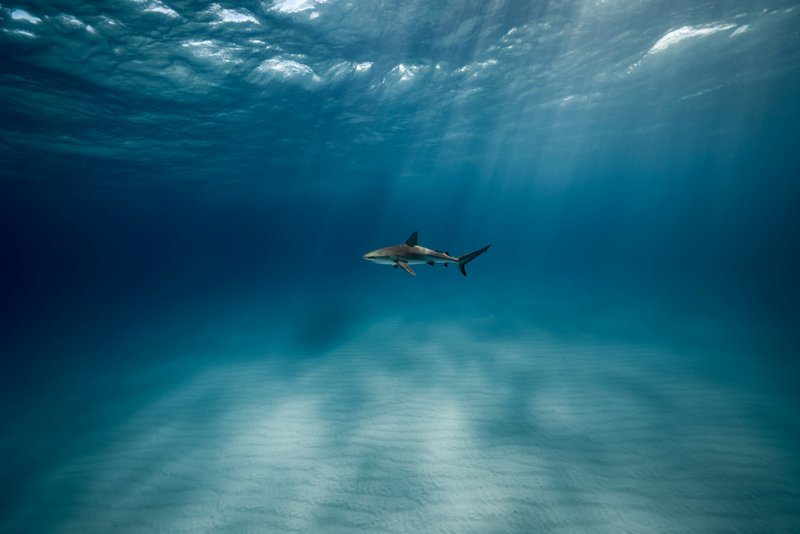
His shark photography tends to push against the “monster” framing that dominates a lot of ocean imagery. Instead, sharks appear as curious, precise, sometimes cautious animals — a corrective to decades of fear-driven visual culture.
Polar Waters
Cold-water diving adds a layer of difficulty most viewers never think about: thick gloves that dull dexterity, dry suits that fight buoyancy control, dive times cut short by temperature rather than air supply. Skerry’s images from Antarctic and Arctic waters — leopard seals, ice formations, seals hauled out on floes — come from some of the most physically demanding shoots in his body of work.
Coral Reefs and Small Marine Life
Not every image is a big animal. Skerry has also built a substantial body of work around reef ecosystems and smaller species, often used to illustrate the slower, quieter crisis of coral bleaching and habitat degradation.
The Craft Behind the Camera
Underwater photography at this level isn’t a matter of pointing a waterproof camera and hoping. It involves:
- Custom housings that protect camera bodies and lenses at depth while still allowing full manual control.
- Strobe lighting rigged to restore color that water filters out within the first few meters of depth.
- Extended dive planning, since many subjects require multiple trips, repeat dives, and long waits for the right behavior to occur.
- Physical conditioning, since holding a stable position against current while framing a shot is its own athletic skill.
The gear matters, but Skerry has spoken often about how much of the work is really about earning an animal’s tolerance — reading its body language, knowing when to hold still, and never mistaking curiosity for permission.
Why the Work Resonates
Ocean conservation is a hard sell in the abstract. Statistics about fish populations or acidification rarely move people the way a single photograph can. Skerry’s images work because they make the underwater world feel adjacent rather than alien — close enough to care about, specific enough to remember.
A photograph of a seal looking directly into the lens does something a chart never will. It turns an ecosystem into an individual, and an individual is much harder to look away from.
A Body of Work Still Growing
Skerry continues to publish books and magazine features built around long-term projects, often spending years on a single subject before the story feels complete. That slow, accumulative approach is part of why the work holds up — it isn’t chasing a single viral image, it’s building an archive of the ocean at a specific, changing moment in time.
Final Thoughts
Brian Skerry underwater photography endures because it treats the ocean as a place with residents, not just scenery. The whales, sharks, seals, and reef dwellers in his frames aren’t props for a striking composition — they’re the subjects of a decades-long conversation between one patient photographer and a world most of us will never see firsthand.