Acrobatic gymnastics doesn’t get the primetime spotlight that artistic gymnastics does, but ask anyone who has watched a top pair, trio, or group perform and they’ll tell you: this sport produces some of the most heart-stopping moments in all of athletics. There are no springboards catapulting flyers into the air here. No vault tables. Just human hands, human shoulders, and a partner’s split-second timing standing between a routine and disaster.
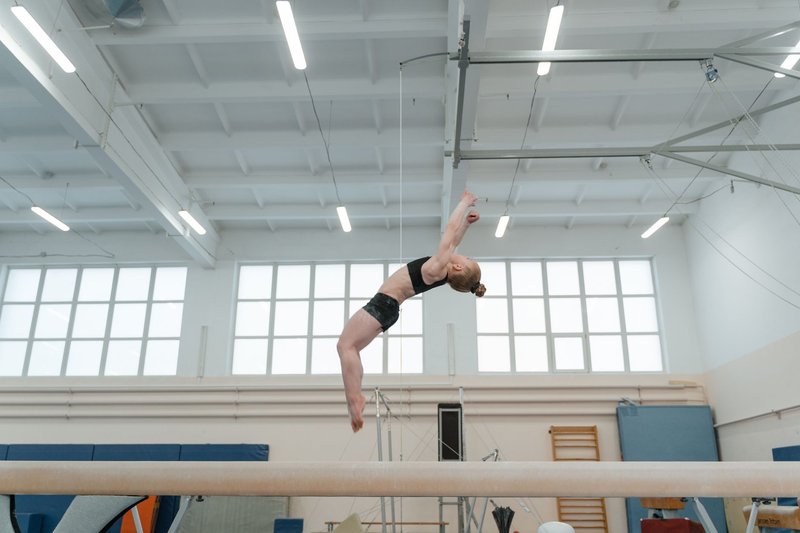
This is a look at the moves that define extreme acrobatic gymnastics — the balances, throws, and towers that separate elite routines from everything else.
What Makes a Move “Extreme” in Acrobatic Gymnastics
Acrobatic gymnastics is built around partnerships. A “base” supports and launches a “flyer” (sometimes called a “top”), and the entire routine hinges on trust that’s rehearsed thousands of times before it ever reaches a competition floor.
The sport is divided into disciplines — women’s pairs, men’s pairs, mixed pairs, women’s trios, and men’s groups — and each has its own signature dangers. Judges score routines on difficulty, execution, and artistry, but the moves below earn their reputation simply because of what happens if they go wrong.
The Moves That Push the Limits
Icarian Throws
Named for the mythological figure who flew too close to the sun, Icarian work involves a base lying on their back, feet in the air, launching a flyer skyward using only their legs. The flyer leaves the base’s feet entirely, rotates or twists in the air, and must return to the exact same landing point — the base’s feet, hands, or shoulders — without a spotter breaking the fall.
What makes this so extreme is the total lack of margin for error. The base can’t see the flyer during the throw. Everything is timed by feel and by counting.
One-Arm Handstand Balances
A handstand is hard enough on the floor. Now try it balanced on a single palm, on top of another gymnast’s shoulder, with your entire bodyweight running through one wrist. Elite flyers hold these one-arm handstand positions atop a stationary or even moving base, sometimes shifting into further transitions — a pose gymnasts call a “swallow” or a “needle” — that require both extraordinary flexibility and core strength.
The tiniest wobble in the base’s stance ripples all the way up. A flyer’s entire job in these moments is to stay perfectly still while balanced several feet in the air.
Dynamic Tumbling Into Partner Catches
In mixed pairs and trios, routines often blend traditional tumbling — round-offs, flips, twisting somersaults — with a partner-based catch at the end. Instead of sticking a landing on the mat, the flyer is caught mid-air by a base who has to absorb the momentum of a full aerial rotation.
This combination move demands two skill sets working in sync: the flyer’s tumbling precision and the base’s ability to read the trajectory and catch cleanly, often without ever seeing the rotation begin.
Foot-to-Foot Balances
Common in men’s pairs and groups, foot-to-foot balances have a flyer standing directly on the soles of a base’s feet while the base lies on their back with legs extended upward. From there, routines build additional elements: one-legged holds, slow transitions into handstands, or even a second flyer stacking on top.
The base’s ankles and core absorb constant micro-adjustments to keep the tower from tipping, all while lying in a position that offers almost no leverage.
Multi-High Towers
Groups — typically three or four gymnasts working together — build human towers two, three, and sometimes four bodies high. A base or pair of bases supports a “middle,” who in turn supports the top flyer in a standing, kneeling, or handstand position.
The higher the tower, the more the smallest error compounds. A shift in the base ripples upward and becomes an amplified sway by the time it reaches the top, which is why groups spend enormous amounts of training time on stability before ever attempting the showier balance positions at height.
Twisting Dismounts
Every acrobatic element eventually has to end, and dismounts — the flyer’s release and landing — are where routines often generate their biggest crowd reactions. A flyer might be thrown, released, or simply step off a multi-person tower, twisting through the air before sticking a landing alone on the mat.
Unlike the throws earlier in a routine, dismounts typically end the partnership’s direct support, meaning the flyer has to complete the rotation and land clean with no one there to catch a mistake.
The Disciplines Behind the Danger
Not every discipline in acrobatic gymnastics carries the same risks, and understanding the categories helps explain why certain moves show up where they do.
- Women’s Pairs: Emphasizes balance and flexibility, with dramatic handstand and needle positions held atop a base.
- Men’s Pairs: Built around strength — foot-to-foot balances, hand-to-hand holds, and dynamic throws that showcase raw power.
- Mixed Pairs: Combines both approaches, blending strength-based lifts with flexibility-driven balance work.
- Women’s Trios: Three gymnasts building towers and transitions, requiring constant coordination between two bases and a flyer.
- Men’s Groups: Four-person routines that produce the tallest, most complex towers in the sport, often the most visually extreme element on any competition floor.
Why These Feats Are So Hard to Judge — and So Hard to Watch
Part of what makes acrobatic gymnastics thrilling to watch is that the danger is visible in real time. Unlike a vault or beam routine, where the athlete works alone, acro routines put multiple bodies in motion simultaneously, each one relying on the other to hit a mark within a fraction of a second.
Judges scoring these routines have to track balance holds, throw height, twisting rotations, and landing precision all at once — while also weighing the artistry of the choreography connecting each element. It’s a discipline that rewards years of repetition, because at the elite level, there’s no room for a base and flyer to be reading each other’s timing for the first time under competition lights.
Conclusion
Acrobatic gymnastics rarely gets the attention of its artistic cousin, but the moves built into its routines — Icarian throws, one-arm handstands at height, four-person towers, twisting dismounts caught mid-air — are some of the most technically demanding and genuinely dangerous feats in competitive sport. Every one of them depends on a partnership built through relentless repetition, which is exactly what makes watching them land so satisfying.