Every spring, mall photo studios and church basements across the country stage the same tiny drama: a giant, glassy-eyed rabbit sits on a wicker throne, and a toddler in their Sunday best is placed directly into its lap. What follows is pure, unfiltered chaos. Kids scared of the Easter Bunny have become a seasonal tradition almost as beloved as the candy itself, and the internet has the photographic evidence to prove it.
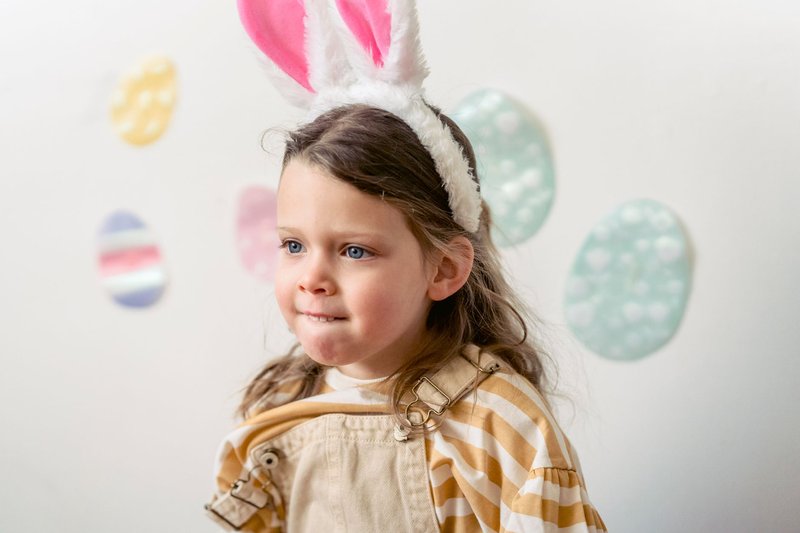
These pictures aren’t cruel — they’re a rite of passage. Somewhere between the ages of one and four, most children develop a healthy, logical fear of a seven-foot animal with a permanent grin and no visible mouth movement. Let’s look at why this happens, and enjoy some of the funniest reactions parents have managed to capture on camera.
Why Kids Are Terrified of the Easter Bunny in the First Place
It’s not irrational. Put yourself in a toddler’s tiny shoes for a second.
The Uncanny Valley Effect
The Easter Bunny costume is humanoid enough to register as “person,” but rabbit enough to register as “not person.” That mismatch is exactly the kind of thing that trips a young brain’s alarm bells. Adults shrug it off as costume logic. A two-year-old just sees something wrong.
Stranger Danger, But Furrier
Around the same age kids start recognizing and preferring familiar faces, they also start rejecting unfamiliar ones. A six-foot rabbit who has never spoken a word to them, doesn’t smell like Mom or Dad, and has unnaturally still eyes checks every box on the “stranger” list, minus the reassurance of a human face doing human things.
The Ambush Factor
Most kids aren’t asked if they want to sit with the Bunny. They’re carried up, plopped down, and expected to smile. There’s no warm-up period, no introduction, no negotiation. It’s the emotional equivalent of being handed to a coworker’s dog you’ve never met and told to pose for a portrait.
The Silence Doesn’t Help
Unlike Santa, who can crouch down and say a friendly “Ho ho ho, what’s your name?” in a warm, reassuring voice, the Easter Bunny is mute. No voice to soften the encounter, no way to explain itself. Just a big frozen smile and two black button eyes staring straight ahead.
The Classic Categories of Easter Bunny Terror
After looking at hundreds of these photos over the years, a few reliable patterns emerge. If you’ve got Easter photos of your own kid, chances are it fits into one of these camps.
The Full-Body Recoil
This is the kid who is technically still in the frame but whose entire torso is arched backward at a 45-degree angle, arms outstretched toward the camera in a silent plea for rescue. Bonus points if one shoe has already come off in the struggle.
The Silent Scream
Mouth wide open, eyes squeezed shut, no sound captured because it’s a photo — but you can practically hear it anyway. Parents often say this is the loudest photo they’ve ever taken.
The Death Grip on a Sibling
One kid is terrified. The other kid, usually older, is completely fine with the situation and is trying to enjoy their moment with the Bunny while a smaller relative clings to their leg like a barnacle, using them as a human shield.
The Thousand-Yard Stare
Not crying, not screaming, just… gone. Eyes fixed somewhere past the camera, processing what’s happening to them in complete silence. Parents call this one “the calm before the storm” because it’s usually followed by category one or two.
The Delayed Reaction
Everything seems fine for the first photo. Smiles all around. Then, halfway through the photoshoot, something shifts — maybe the Bunny moved an arm, maybe it made a sound — and the entire session collapses into category two territory.
What Makes These Photos So Shareable
Part of the charm is the contrast. You’ve got a bright, pastel-colored setting — tulips, eggs, spring banners — and in the middle of it, a small human having what looks like the worst moment of their short life. The wholesomeness of the backdrop makes the meltdown funnier, not sadder.
There’s also the universality of it. Almost every family has one of these photos tucked in an album or a phone’s camera roll. Sharing them online taps into a collective memory: we’ve all either been that terrified kid, held that terrified kid, or laughed at a sibling who was that terrified kid.
And unlike a lot of internet content, nobody’s really the villain here. The Bunny isn’t doing anything wrong. The kid isn’t doing anything wrong. It’s just two parties with wildly different understandings of the situation, captured in a single frame.
Tips for Parents Who Want to Avoid (or Get) the Meltdown Photo
If you’re heading into Easter Bunny photo season with a toddler, here’s what tends to help — or, if you’re chasing the classic terrified reaction for laughs, what tends to guarantee it.
- Let them watch from a distance first. Kids who see other children interact with the Bunny before their turn tend to be calmer. Skip this step if you’re hoping for chaos.
- Skip the surprise approach. Walking up and immediately placing a child in the Bunny’s lap is the fastest route to a meltdown. It’s also, admittedly, how most of the funniest photos happen.
- Have the Bunny stay still. Sudden arm movements or head turns from inside a bulky costume can startle kids who were otherwise doing fine.
- Keep the camera ready at all times. The best reactions are split-second. Blink and you’ll miss the exact moment a calm toddler becomes a screaming one.
- Don’t force it. A photo of a happy kid waving at the Bunny from a safe distance is still a good photo. Not every Easter memory needs a struggle in it — though the internet clearly disagrees.
The Bottom Line
Kids scared of the Easter Bunny isn’t a new phenomenon, and it isn’t going away. It’s a predictable, biological, slightly hilarious collision between childhood development and a giant costumed rabbit that nobody warned them about. Every spring, a new batch of photos joins the archive, and every spring, parents everywhere nod along knowingly.
The good news is those terrified toddlers almost never remember the moment themselves. The photo, on the other hand, sticks around forever — pulled out at birthday parties, graduations, and eventually weddings, guaranteed to get a laugh every single time.