Every student has a story. Maybe it’s the exam answer that seemed brilliant at 2am and absurd in daylight, or the group project that imploded three hours before the deadline. School has a way of turning ordinary humans into accidental comedians, and the internet has been collecting the evidence for years.
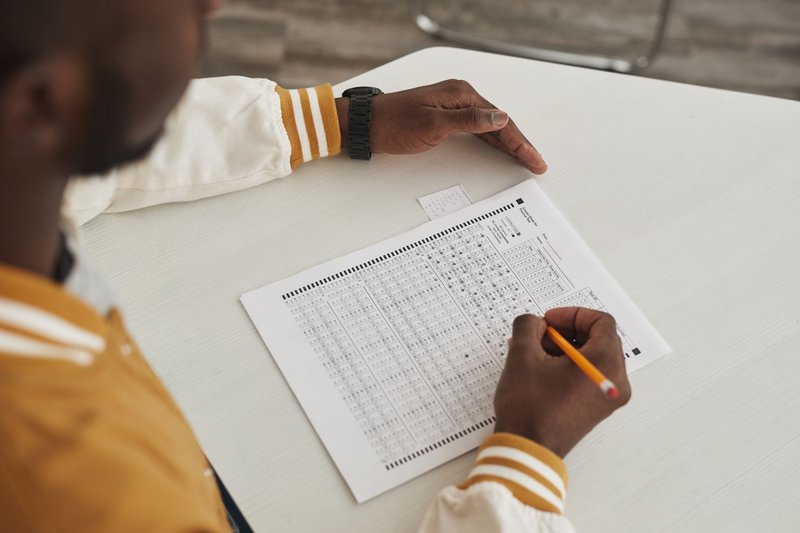
This is a tour through the funniest, most relatable ways students have faced academic disaster — and somehow made it out with a good story instead of just a bad grade.

Exam Answers That Deserve Extra Credit for Creativity
Nothing brings out raw improvisation like a blank mind and a ticking clock. When a student doesn’t know the answer, the instinct isn’t always to leave it blank — it’s to write something so confident-sounding that maybe, just maybe, the teacher won’t notice.
The Confident Guess
A classic move: restating the question as if it were the answer. Asked to “explain photosynthesis,” a stumped student might write, “Photosynthesis is the process by which plants photosynthesize.” It’s circular, it’s useless, and it somehow takes up half the page — which, in a pinch, feels like progress.
The Essay That Gives Up Mid-Sentence
Some of the most shared exam photos online show essays that start strong and then just stop, often with a line like “I’m sorry, I ran out of time” or a hastily drawn stick figure shrugging next to the unfinished paragraph. There’s something honest about it — no excuses, just surrender in real time.
The Math Answer With a Plot Twist
Math tests produce a specific genre of fail: the answer that’s technically wrong but shows real effort to escape the problem. A student asked to “solve for x” has, more than once, simply circled the x in the equation and written “found it.” It’s wrong. It’s also weirdly satisfying.
Classroom Mishaps Everyone Has Lived Through
Not every student fail happens on paper. Some of the best material comes from the physical, chaotic reality of being a person in a room full of other people, all pretending to pay attention.
The Group Project Meltdown
Group projects have a reliable failure pattern: one person does the work, one person disappears until the day before, and one person shows up to the presentation not knowing which slide is theirs. The resulting stumble through unfamiliar content, reading someone else’s bullet points for the first time out loud, is a rite of passage.
The Wrong Answer Said With Total Confidence
There’s a specific kind of classroom silence that follows a student answering a question with total, unwavering confidence — and being completely wrong. The teacher pauses. The class holds its breath. Nobody corrects them right away because the delivery was just too convincing.
The Backpack Explosion
Every student has experienced or witnessed the mid-hallway backpack failure: a zipper gives out, and suddenly notebooks, loose pens, half-eaten snacks, and a single rogue shoe are scattered across the floor while everyone else steps around the wreckage on their way to class.
The Presentation Technology Betrayal
You rehearsed the slideshow ten times at home. In front of the class, the projector refuses to connect, the file won’t open, or autocorrect has quietly replaced a key term with something nonsensical. The presentation continues anyway, because it has to, while the student narrates slides that no longer make sense.
Homework Excuses That Reached Legendary Status
The homework excuse is its own art form. Good ones are specific, oddly plausible, and delivered with a straight face.
- The pet sabotage: A dog, cat, or in rarer cases a rabbit, is blamed for destroying an assignment — sometimes true, often suspiciously convenient.
- The tech betrayal: “My document didn’t save” has been said so many times it barely registers as an excuse anymore, even when it’s genuinely true.
- The overly honest confession: Some students skip the excuse entirely and just write “I forgot” in the space where the assignment should be, which is somehow more disarming than any elaborate story.
- The family emergency that wasn’t: A grandparent’s birthday, a cousin’s visit, a sudden family trip — reasons that sound serious enough to avoid follow-up questions.
Autocorrect and Typing Fails in Digital Assignments
As more schoolwork moved onto laptops and phones, a new category of fail emerged: the digital slip-up that survives forever in submitted files and email chains.
The Autocorrect Ambush
Typing an essay quickly means trusting autocorrect, and autocorrect does not always deserve that trust. A serious historical essay can end up referencing “Adolf Hipster” or a “Constitutional convention” that autocorrect insists on calling a “convenience.” The mistake usually isn’t caught until after submission.
The Reply-All Disaster
Somewhere, a student has hit “reply all” on a class-wide email to complain about the assignment, unaware that the entire class — and the teacher — was on the thread. There is no version of this that ends well, but it always makes for a good story afterward.
The Wrong File Upload
Submitting a meme, a grocery list, or an entirely unrelated essay instead of the actual assignment is a rite of passage in the era of online submission portals. The panic of realizing it, followed by the scramble to fix it before the deadline closes, is a universal experience.
Why These Moments Are So Relatable
Part of what makes student fails so enduring as a genre of humor is how universal the underlying feelings are: the pressure of deadlines, the fear of being called on, the gap between how prepared you thought you were and how prepared you actually were. Almost everyone who has sat through a class has a version of one of these stories.
These moments also tend to age well. A failed exam answer or a group project gone wrong feels mortifying in the moment, but with a little distance, it becomes one of the better stories from that year — the kind that gets brought up at reunions.
The Takeaway
Student fails work as comedy because they’re rooted in something real: the awkward, high-pressure, occasionally absurd experience of learning in public. Nobody gets through school without at least one moment they’d rather forget — and, later, retell. The blank stare during a pop quiz, the group project held together by duct tape and last-minute panic, the confidently wrong answer nobody had the heart to correct right away — these are the small, human moments that make school memorable, long after the actual grades are forgotten.